.svg)

%404x%20(1)-min.webp)


Heading
Game Influencer Marketing Across the Lifecycle: From Pre-Launch to Long Tail

By
Cloutboost
When Baldur's Gate 3 entered Early Access in 2020, Larian Studios prioritized feedback and visibility over immediate sales. With only Act 1 playable, creators were encouraged to stream unfinished builds and share candid reactions. Influencers like Mortismal Gaming, Fextralife, and CohhCarnage were among the first to cover the Early Access release - not as advertisers, but as participants in a public feedback loop. Their content helped surface issues around combat balance, class design, UI clarity, and narrative reactivity, giving Larian valuable insight while generating sustained visibility throughout development.
Mortismal even published a video titled "Baldur's Gate 3: Things To Improve Before Launch," offering constructive criticism despite his reputation as a self-described "Larian shill."
Throughout Early Access, Larian actively incorporated player and creator feedback, making substantial changes to systems, companions, and encounter design. Regular updates prompted creators to return repeatedly, compounding coverage and building trust and social proof within the CRPG community long before launch.
By full release in August 2023, influencer marketing naturally shifted from discovery to conversion at scale. Launch-day streams, reviews, and long-form playthroughs from creators who had followed the game for years turned accumulated awareness into record-breaking sales and critical acclaim.
Post-launch, creators extended the game’s long tail through retrospectives, class guides, mod showcases, and analysis content, keeping Baldur’s Gate 3 culturally relevant months after release.
Baldur’s Gate 3 ultimately demonstrates that influencer marketing works best when it evolves with the game’s lifecycle. Early on, influencers validated systems and complexity. Midway, they sustained momentum and trust. At launch, they drove conversion. In the long tail, they preserved relevance and community engagement. The game’s success was not the result of a single viral moment, but of multi-year creator alignment with where the game actually was at each stage of development.
Influencer Marketing Is Not a One-Time Launch Tactic
Each phase of a game’s lifecycle shapes how players discover, evaluate, and engage with it, and influencer strategies must adapt accordingly. One of the most common mistakes developers make is waiting until weeks before launch to line up creators. By that point, they’ve already missed opportunities to build relationships, gather early feedback, and generate momentum that carries through launch.
Understanding the lifecycle framework is critical because player intent, platform behavior, and content expectations shift at every stage. Games that adapt their influencer strategy over time tend to maintain momentum well beyond launch. Games that don’t often burn through attention early and struggle to recover.
The Game Marketing Lifecycle Framework
Most games move through seven broad stages:
- Pre-Announcement / Concept Validation
- Reveal / Announcement Phase
- Demo / Playtest
- Early Access
- Launch Window
- Post-Launch / Live Ops
- Late Life / Long Tail
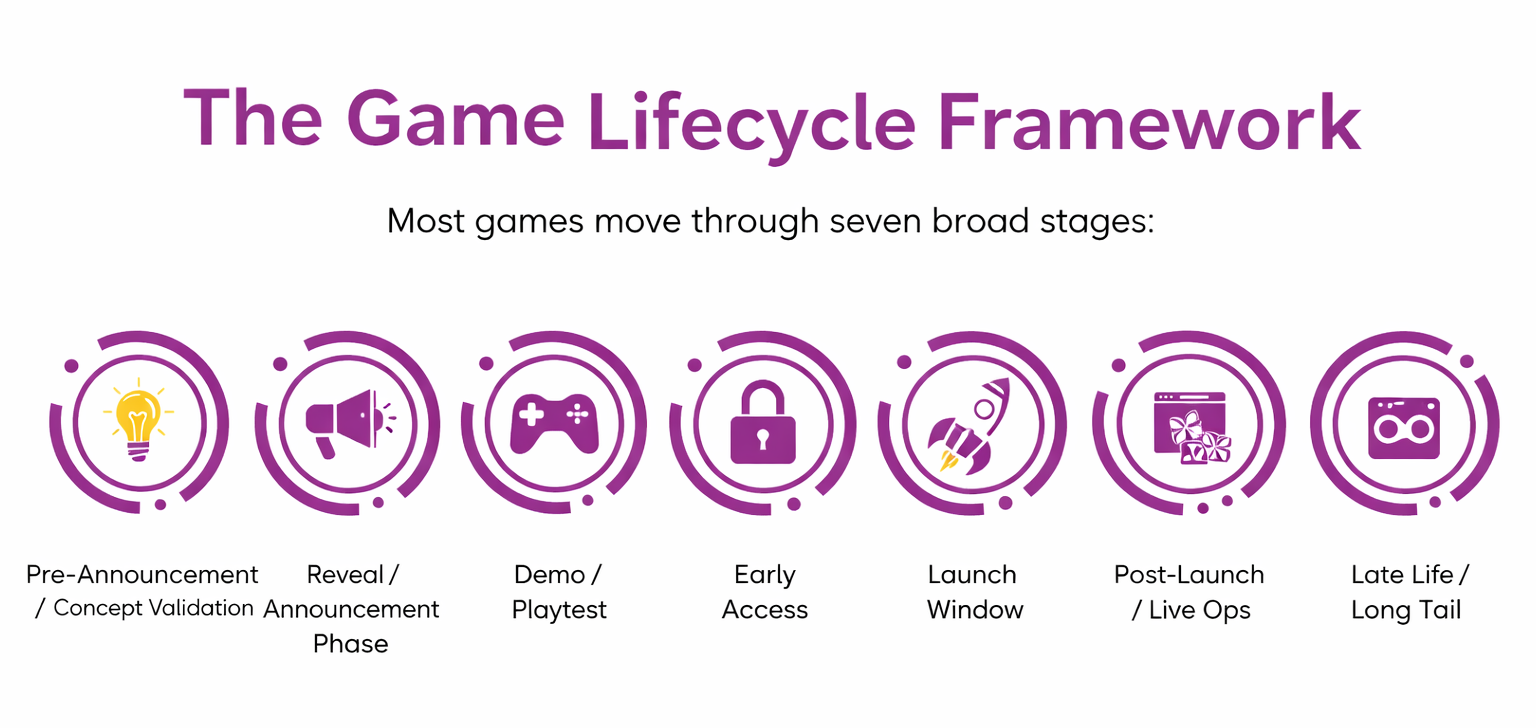
Influencer marketing works in all stages, but it plays a different role in each. Problems arise when teams expect the same creator strategy to handle validation, awareness, conversion, and retention all at once.
Here's what you need to think about at each stage:
- Influencer type: Different types of influencers make sense at different stages because their risk tolerance, audience expectations, and content style vary. Early stages favor niche enthusiasts willing to experiment; later stages require broader reach.
- Platform: YouTube and TikTok drive early discovery, while Twitch becomes critical during Early Access and launch, when live gameplay helps audiences assess depth, pacing, and replay value.
- Content format: Short-form videos fuel curiosity; long-form videos validate purchase decisions and build deeper engagement. Leverage each for its strength instead of choosing one over the other.
- Outreach approach: Early stages benefit from organic outreach to niche creators. As the game matures, paid sponsorships and ambassadors become necessary to scale without losing authenticity.
With these variables in mind, let's break down what effective influencer marketing looks like at each stage of the lifecycle.
Stage-Specific Influencer Marketing Strategies
Stage 1: Pre-Announcement: Building Your Inner Circle
Goal: Validate the concept, test core mechanics, and gather honest feedback before public exposure.
Timeline: 12–24+ months before launch
Platforms: Private Discord servers, direct communication, closed testing environments
Content Format: No public content, this stage is about feedback, not visibility
Influencer Types: Enthusiast creators who actively seek out new and unusual games. These creators enjoy discovering something fresh and are willing to experiment with unfinished builds. They're often mid-tier creators with deep genre expertise and engaged communities. Their willingness to provide candid feedback makes them ideal partners at this stage.
Tactics:
- At this stage, outreach should be personal and relationship-driven. Reach out directly to creators who already cover similar games, and leverage warm introductions where possible. Frame the conversation as a genuine collaboration rather than a transactional deal - you're asking for insight, not promotion.
- Invite trusted mid-tier creators into private playtests under NDA, where they can offer feedback on mechanics, pacing, and visual direction.
- Nothing should go public yet; the goal is product validation, not visibility. The relationships you build now will pay off in later stages when these same creators become early advocates with a genuine stake in your game's success.
Key Insight: At this stage, influencers aren't marketers - they're consultants. Their feedback can shape development decisions and prevent costly mistakes. The relationships you build now create goodwill that translates into authentic coverage later.
Stage 2: Reveal / Announcement Phase
Goal: Generate initial awareness, build wishlists/beta signups, and establish positioning in the market.
Timeline: 12+ months before launch
Platforms: YouTube (trailers, reaction videos), TikTok (teaser clips), Twitter/X (announcements, discussion)
Content Format: Short-form teaser content, announcement trailers, first-look reactions, developer interviews
Influencer Types: Genre specialists and tastemakers who can lend credibility to your announcement. These creators have established authority in your game's category and their coverage signals to broader audiences that your game is worth watching. Mix of mid-tier specialists (50K–250K) and select larger creators (250K+) for amplification.
Tactics:
- Offer select creators early access to announcement materials and set up embargo-based previews so coverage drops in sync with your official reveal. When the announcement goes live, coordinate reaction videos and first-look previews featuring exclusive footage.
- Supplement gameplay content with developer interviews that add narrative depth and give creators something unique to share.
- Encourage social amplification of your official posts to extend reach.
- For maximum impact, time your reveal around major industry moments like GDC, the Future Games Show, or The Game Awards, where attention is already concentrated and creators are actively hunting for new games to cover.
Key Insight: Your announcement sets the narrative. Influencer coverage at this stage shapes how the market perceives your game. A strong reveal with credible creator endorsements establishes momentum that carries through subsequent stages.
Example: Owlcat Games executed a textbook reveal for The Expanse: Osiris Reborn at the Future Games Show Summer Showcase 2025, timing their world premiere to coincide with Summer Game Fest when industry attention peaks. The reveal opened the showcase, a premium placement signaling confidence, and was hosted by Laura Bailey and Matthew Mercer, lending immediate credibility. Within hours, genre specialists like AngryJoeShow (5M+ subscribers) and ForceGaming published reaction videos praising the trailer's Mass Effect-inspired gameplay, amplifying the "spiritual successor" narrative that Owlcat reinforced in developer interviews.
Stage 3: Demo / Playtest Phase
Goal: Drive demo downloads/wishlists gather public feedback, and build community momentum.
Timeline: 3–6 months before launch (often aligned with Steam Next Fest or similar events)
Platforms: Twitch (live demo streams), YouTube (demo impressions, gameplay breakdowns), TikTok (highlight clips)
Content Format: Live streams of demo gameplay, first impressions videos, highlight reels, community discussion content
Influencer Types: A broader mix of Enthusiasts and Entertainers. Enthusiasts continue to provide credibility and detailed coverage, while Entertainers (creators focused on engaging, personality-driven content)help expand reach beyond core genre fans. Target mid-tier creators who actively cover demos and early builds.
Tactics:
- At pre-launch, your biggest challenge isn’t conversion but visibility. Influencer marketing works best here when it feels exploratory rather than polished or sales-driven.
- Give select creators demo access before it goes public, and be specific about what feedback you're looking for, whether that's input on controls, difficulty, or first impressions. Follow up afterward to show how their feedback influenced development; this reinforces the collaborative relationship and makes creators feel invested in your game's success.
- When the demo goes live, coordinate live streams during high-visibility moments like Steam Next Fest, where audiences are actively looking for new games to try.
- Encourage creators to produce "should you play this demo?" recommendation content and highlight reels that capture standout moments.
Key Insight: The demo phase is your first real market test. Creator reactions here predict launch reception. More importantly, closing the feedback loop - showing creators their input matters- builds long-term relationships and increases likelihood of launch coverage.
Example: When Supergiant Games launched the Hades 2 technical test in April 2024, they gave select players access to the game's first area ahead of the broader Early Access release. Roguelike specialists like Haelian were among the first to publish gameplay and first impressions, offering detailed breakdowns of Melinoë's new combat systems, the reworked boon mechanics, and how the sequel differentiated itself from the original.
Stage 4: Early Access
Goal: Sustain engagement, gather ongoing feedback, and build community through iterative development.
Timeline: 3–12+ months before full launch (varies significantly by game)
Platforms: Twitch (extended gameplay, community streams), YouTube (update coverage, deep dives), Discord (community building)
Content Format: Long-form gameplay streams, update patch coverage, progression guides, community spotlights, developer update reactions
Influencer Types: Committed Enthusiasts who will return for multiple content cycles. Early Access requires creators willing to revisit the game as it evolves - not just one-and-done coverage. Look for creators who have historically covered Early Access titles and enjoy documenting a game's evolution. Community-focused creators who engage with their audience in Discord or chat are particularly valuable.
Tactics:
- Stay in regular contact with creators who covered your game earlier, and give them early access to major updates before public release. Establish direct communication channels, whether through Discord, email, or a private creator group, so they hear about changes from you first and can offer feedback that informs development priorities.
- For creators who've consistently supported the game, consider informal ambassador relationships that give them deeper access and a sense of ownership. When updates drop, coordinate coverage around patch notes and "what's changed" return videos that bring lapsed viewers back.
- Pre-launch content doesn’t need to explain everything. In fact, it’s usually better if it doesn’t. Short clips, previews, or early reactions give creators room to speculate and discuss, which can help drive more organic engagement than heavily scripted content
- At the same time, encourage long-form content that explores progression systems, endgame depth, or new features in detail, this is what helps convert curious viewers into committed players.
- Start narrow and genre-specific. Target influencers who cover your exact niche before expanding outward. This establishes credibility with core genre fans first - creators who speak the language of your game and whose audiences are already primed for it. Once that foundation is in place and your core audience is engaged, expand to adjacent creators who can introduce the game to broader audiences.
Key Insight: Early Access is a marathon, not a sprint. The goal isn't one viral moment - it's sustained visibility across multiple update cycles. Creators who return repeatedly signal to their audience that the game is actively improving and worth following.
Example: Mortismal Gaming began covering Baldur's Gate 3 from its initial Early Access launch in 2020 and returned consistently as the game evolved. Two years later, he released "2 Years in Early Access," a retrospective documenting the game's transformation. This kind of sustained creator investment signals to audiences that a game is actively improving and worth following.
Stage 5: Launch Window
Goal: Maximize conversion, drive sales/downloads, and dominate visibility during the critical launch period.
Timeline: Launch week (with preparation starting 4 - 6 weeks prior)
Platforms: All major platforms simultaneously: Twitch (launch streams), YouTube (reviews, let's plays), TikTok (viral moments), Twitter/X (amplification), Instagram, DIscord.
Content Format: Launch-day live streams, full reviews, let's play series, short-form highlight clips, comparison content, buying guides
Influencer Types: Full spectrum deployment. Enthusiasts provide credibility and detailed analysis. Entertainers drive reach and viral moments. Mainstream creators (500K+) amplify to broader audiences. The mix depends on budget and game type, but launch typically requires the broadest creator activation of any stage.
Tactics:
- Distribute review codes two to three weeks before launch with clear embargo dates, giving creators enough time to produce thoughtful coverage without leaking early. F
- For key creators whose coverage you need to guarantee, paid sponsorships make sense at this stage - just ensure the partnerships feel authentic and align with their usual content.
- Provide clear assets, messaging, and feature highlights so creators can represent your game accurately and compellingly.
- Coordinate launch timing to cluster creator activity, creating a wave of visibility rather than a trickle. When multiple creators cover your game within the same 24–48 hour window, you create a sense of cultural moment. Viewers see the game everywhere, which triggers FOMO and drives conversion.
- Event-based campaigns amplify this effect. Launch tournaments, speedrun challenges, and exclusive in-game items for viewers to give creators natural hooks for their content and increase your game’s reach.
Key Insight: Launch is about conversion. All the awareness built in previous stages now needs to translate into action. Coordinating multiple creators to go live or publish simultaneously creates algorithmic momentum—platforms reward concentrated activity with increased visibility.
Stage 6: Post-Launch / Live Ops
Goal: Maintain engagement, reduce churn, and grow the active player base through ongoing content and updates.
Timeline: 1–12+ months after launch (ongoing for live service games)
Platforms: Twitch (community streams, update coverage), YouTube (patch breakdowns, guides, tier lists), TikTok/YouTube Shorts (update highlights, community moments)
Content Format: Update and DLC coverage, seasonal event content, guide and tutorial content, community highlights, competitive/esports coverage (if applicable)
Influencer Types: This stage calls for a dual approach:
- Loyalists, creators who genuinely enjoy your game, remain essential for authentic, ongoing coverage. Prioritize those with sustained interest and consider formalizing ambassador relationships with top performers from launch.
- But by this point, your core audience is likely saturated. Expand reach by partnering with mainstream or adjacent creators who haven't covered your game yet, a well-timed sponsorship tied to a major update can introduce your game to entirely new audiences.
Tactics:
- Formalize ambassador relationships with top-performing creators to ensure consistent coverage and give them a stake in the game's ongoing success. Support community creators with assets, access, and visibility, they're often the backbone of long-term engagement.
- Coordinate "what's new" coverage around updates and DLC drops, and lean into seasonal events with creator participation and promotion. Encourage guide content that helps players engage with new systems, and support community tournaments or competitive coverage if your game has that potential.
- Amplify user-generated content by surfacing and promoting standout player creations—this rewards your community while giving creators easy material to share.
Key Insight: Every major update is a re-engagement opportunity. Treat content drops, DLC releases, and seasonal events like mini-launches with dedicated influencer activations. This sustained visibility prevents the post-launch dropoff that kills many games.
Example: Senpapi's "Explaining Hades to a friend" short captures exactly how games stay culturally relevant post-launch: quick, funny, shareable content that introduces the game to new audiences through humor rather than hard sells. These organic community moments extend a game's reach well beyond its core fanbase and keep it circulating on social feeds months after release.
Stage 7: Late Life / Long Tail
Goal: Extend the game's lifespan, maintain community engagement, and preserve cultural relevance.
Timeline: 12+ months after launch (ongoing until end of life)
Platforms: YouTube (retrospectives, legacy content), Twitch (dedicated community streams), emerging platforms for archival content
Content Format: Retrospective and anniversary content, "is it worth playing in [year]?" videos, community spotlight content, competitive/speedrun coverage, legacy and historical analysis
Influencer Types: Ambassadors and dedicated community creators. At this stage, broad reach matters less than authentic, sustained engagement. Formalize relationships with creators who have proven long-term commitment to the game. These partners become stewards of the community and help preserve the game's relevance.
Tactics:
- For reactivation pushes, coordinate "should you return?" campaigns targeting lapsed players, highlighting what's changed since they left. Have them check in after months away: What's changed? What's improved? Is it worth returning? This content specifically targets lapsed players and can drive meaningful reactivation during content droughts.
- Leverage anniversaries and milestones as opportunities for celebration content, these moments create natural hooks for coverage and remind audiences the game is still thriving.
- Encourage UGC showcases that spotlight ongoing player creativity, and support retrospective content that preserves the game's legacy and reminds viewers why it mattered. At this stage, the goal isn't explosive growth - it's maintaining a healthy, engaged community that sustains the game for years to come.
Key Insight: Games in late life can still drive meaningful revenue and engagement with the right approach. Ambassador programs formalize relationships with your most passionate creator advocates, giving them exclusive access, direct developer communication, and community recognition. These creators become the game's most credible voices.
Example: The "Is Destiny 2 worth playing in [year]?" genre has become a staple for live-service games in late life. Creators like Sweatcicle and Datto regularly produce these videos targeting lapsed players, breaking down what's changed, what's improved, and whether returning is worthwhile. This content drives meaningful reactivation during expansion launches and major updates, converting former players into active ones.
Budget Allocation Across the Lifecycle
How you distribute your influencer marketing budget should shift with each lifecycle stage. While exact percentages vary by game type, genre, and overall marketing budget, these principles provide a framework:
Pre-Announcement (5–10% of total influencer budget): Minimal spend—mostly time investment in relationship building. Any costs are typically limited to travel for playtests or small thank-you gestures for feedback participants.
Reveal / Announcement (10–15%): Moderate investment in coordinated coverage. Some paid partnerships with key tastemakers may be warranted, but organic interest from the right creators carries more weight at this stage.
Demo / Playtest (10–15%): Similar to the announcement phase. Focus spending on Steam Next Fest activations or equivalent high-visibility moments where concentrated investment yields outsized returns.
Early Access (15–20%): Sustained investment across multiple update cycles. Budget for ongoing creator relationships rather than one-time activations. This stage often gets underfunded because it lacks the urgency of launch.
Launch Window (30–40%): Peak investment. This is where paid sponsorships, guaranteed coverage, and broad activation justify significant spend. Coordinate budget to cluster activity within the launch window.
Post-Launch / Live Ops (10–15%): Ongoing investment tied to content drops and seasonal events. Treat major updates as mini-launches with dedicated budget allocation.
Late Life (5–10%): Reduced but consistent investment in ambassador programs and anniversary activations. Small, targeted spend often yields strong ROI with dedicated community creators.
For smaller studios with limited budgets: Prioritize relationship-building in early stages (low cost, high long-term value), concentrate paid spend almost exclusively on launch window, and rely on organic coverage from cultivated relationships for post-launch visibility.
Measuring Influencer Marketing Effectiveness
Defining clear KPIs at each stage is essential, but measurement goes beyond simply tracking metrics, you need attribution systems that connect creator coverage to actual outcomes.
Stage-Specific KPIs
Pre-Announcement: Quality of feedback received, relationship strength (measured by creator responsiveness and engagement), NDA compliance
Reveal / Announcement: Wishlist additions, social media impressions and engagement, share of voice relative to competing announcements
Demo / Playtest: Demo downloads, wishlist conversion rate, feedback volume and sentiment, creator return rate (how many come back for launch)
Early Access: Sustained coverage frequency, player retention between updates, community growth (Discord members, subreddit subscribers), sentiment trajectory
Launch Window: Sales/downloads, review scores, concurrent players, conversion rate from wishlists, social media velocity
Post-Launch: Monthly active users, retention rates, DLC attachment rate, community health metrics, reactivation rates after updates
Late Life: Community size stability, reactivation campaign performance, anniversary engagement, new player acquisition from "is it worth playing?" content
Cross-Stage Best Practices
While each lifecycle stage demands a different approach, certain principles hold true throughout. The most successful influencer marketing programs aren't just well-executed at individual stages, they're consistent, adaptive, and relationship-driven from start to finish. These best practices should inform your strategy regardless of where your game sits in its lifecycle:
Track What Works. If YouTube drives more wishlists than Twitch, allocate accordingly. If certain creators consistently deliver ROI, invest more in those relationships. Data should inform strategy at every stage.
Stay Flexible. What worked at pre-launch won't work in maturity. Platform algorithms change, creator audiences evolve, and player expectations shift. Rigid strategies fail; adaptive ones succeed.
Define Clear KPIs. Pre-launch might track wishlists and demo downloads. Launch measures sales and installs. Growth tracks monthly active users and retention. Late life monitors reactivation and community health. Align metrics with stage-specific goals.
Maintain Momentum. Don't let activity die between lifecycle phases. Keep some influencer engagement going as you transition from launch to growth, from growth to maturity. Gaps in visibility are hard to recover from.
Cross-Platform Amplification. Don't put all your eggs in one basket. Use YouTube for long-form reviews that explain why your game matters, Twitch for live gameplay with real-time community interaction, TikTok for short clips of your most shareable moments, and Twitter/X to amplify everything while engaging directly with your community. Each platform serves a different purpose - leverage them together.
Long-Tail Partnerships. Instead of endless one-off sponsorships, build ongoing relationships with a core group of creators. When an influencer regularly covers your game over months, their audience knows it's real enthusiasm, not just another paid spot. Long-term partnerships also reduce audience skepticism. When creators revisit a game organically over time, coverage feels earned instead of transactional.
Conclusion: Influencer Marketing Works Best When It Grows with the Game
With thousands of titles launching yearly, standing out requires strategic, lifecycle-aware marketing. Influencer partnerships are powerful tools, but only when deployed intelligently.
Games that succeed long-term rarely rely on a single influencer push. They build strategies that evolve with the game, from pre-launch playtesting with niche creators to post-launch retention initiatives with loyal ambassadors.
The studios that win understand that influencer marketing isn't about volume or virality alone. It's about alignment between creators, platforms, and where a game truly is in its lifecycle.


Related articles you may also like
Reddit for Game Developers: The Complete Guide
Top Gaming Marketing & PR Agencies for Video Game Publishers


Request a Free Strategy Session
Discover how Cloutboost can boost your video game's success with our Influencer Marketing Services.