.svg)

%404x%20(1)-min.webp)


Heading
TikTok’s Changing Landscape for Game Marketing in 2026: What Developers Need to Know

By
Cloutboost
TikTok offers developers access to an audience nearly 4x larger than Twitch - 1.6 billion monthly active users compared to Twitch's 240 million. For players, it's increasingly become the primary discovery channel for new games. According to a TikTok for Business report, 75% of TikTok gamers discovered new gaming content on TikTok.
For the past several years, TikTok felt like magic for game marketing. A single 30-second clip could change a title's entire trajectory, sometimes overnight. Many titles exploded purely through short-form content, and developers who adopted the platform early reaped extraordinary rewards with minimal investment.
But in 2025, something fundamental has shifted. Between real regulatory concerns in the United States and noticeable changes in the platform's algorithm, game publishers are starting to confront a difficult truth: TikTok no longer offers the same level of free organic visibility it once did. Today, significant views typically require paid promotion. The drift away from easy organic reach began in 2024 but accelerated sharply in 2025.
This article explores what's changed on TikTok, why it happened, and how game developers should adapt their marketing strategies in 2026 and beyond.
The Golden Era: When TikTok Was Magic
One of the great illustrations of TikTok's golden era is the breakout moment for Before Your Eyes in 2021. A week before launch, the game was relatively unknown. Then TikTok creator Wholesome Games posted a short TikTok describing its blink-controlled narrative. The clip blew up, gathering 1.5 million views within days.
Soon after, another gaming creator @nintendostaff streamed the game on Twitch, clipped her emotional reaction into a tight, 10-second TikTok, and watched it rocket past a million views. Today, that video has 4.3 million views.
Another example is Omno, which matched perfectly with TikTok's aesthetic style. With its serene visuals, picturesque landscapes, and simple but beautiful gameplay, the game resonated deeply with TikTok's audience. A single video posted by the developer harnessed 1.9 million views around publication and has since climbed to 4.3 million. What makes this particularly notable: Omno was built by a solo developer, demonstrating that even small teams were able to achieve significant organic reach when their content aligned with the platform's style.
Other indie games experienced similar breakthrough moments and these weren't accidents. They were the result of TikTok's generous algorithm during its growth phase - what many now call organic visibility arbitrage.
TikTok’s Glory Days Were Driven by Visibility Arbitrage
In its early years, when the platform was still gaining traction, its algorithm generously distributed exposure to creators and brands in order to capture market share from competitors like YouTube, Instagram, and Twitch.
From 2019 to 2022, TikTok gave away enormous organic distribution. Developers who posted early, or partnered with early creators, saw millions of impressions without paying a cent.
Thomas Reisenegger, co-founder of Future Friends Games, was one of the most vocal early champions. Back in 2021, he described TikTok as "ridiculously effective" for discovery, especially for indie titles. His agency helped numerous indie games achieve breakthrough visibility through the platform.
But at the beginning of 2025, Thomas posted something very different: performance graphs showing a dramatic collapse in organic reach for the exact same content strategies that once delivered millions of views.
The data came from A Webbing Journey, a game with strong viral potential whose dev team posts daily across TikTok (150k followers), Instagram (38k), and YouTube (24k). Over a six-month period, TikTok views saw a sharp decline in the final two months, and this wasn't an isolated case. Across the 30+ games his agency works with, Thomas observed that TikTok views are declining for most indie titles.

This trend affects both publisher-owned accounts and influencer partnerships. According to Valeriia Kramp, Influencer Manager at Owlcat Games:
"The reach of our paid TikTok campaigns has dropped sharply over the past several months, even when working with the same creators under similar conditions. For example, we worked with the same creator in June and received 425.8K views on a sponsored TikTok. We worked with the same creator again in November and received 6K views."
The 2025 Reality: Declining Organic Reach
The era of TikTok's free visibility is ending, and here's why:
1. Saturation: More Creators, More Competition.
When TikTok was newer, gaming content creators were relatively rare. Now, thousands compete for the same audience attention and there's simply less room in the For You feed than before.
2. Monetization: From Growth Mode to Extraction Mode
With over 1.6 billion monthly users, TikTok is no longer in growth mode, it's in monetization mode. The platform is prioritizing revenue-generating features like TikTok Shop and paid advertising over organic distribution. Reaching audiences beyond your existing followers increasingly requires paid amplification.
As Kramp puts it:
“From our perspective, and based on conversations with multiple creators, TikTok seems to be pushing Spark Ads as the only reliable way to secure reach. Several creators believe that sponsored videos without Spark Ads may be shadow-banned by the algorithm.”
3. Hyper-Personalization: Harder to Reach Broad Audiences
TikTok's algorithm now delivers an intensely personalized experience based on watch history, search behavior, engagement patterns, and location. This is great for users, but it makes reaching a broad audience with a single piece of content far more difficult. Developers face a strategic tension: create content with universal appeal (extremely hard) or go deep on a specific niche (more achievable, but limited scale).
Gaming TikTok creator Veteran Joystick describes it this way:
"TikTok's reach has definitely shifted in the last 6–12 months. The platform feels slower and more selective. You still get spikes, but the easy virality is gone. Gaming especially feels throttled unless you hit the algorithm with a perfect hook, tight pacing, and very broad appeal, unless you have a very large following. Niche content gets punished."
In short, TikTok has become a more competitive and monetized ecosystem, similar to the evolution seen on YouTube and Instagram.
TikTok Was Never the Best Platform for Every Game
It's important to understand that even during TikTok's golden era, the platform wasn't ideal for every type of game. The TikTok algorithm prioritizes retention and engagement over follower count, and certain types of games naturally create content that triggers curiosity or emotion in the first 3 seconds.
Games That Thrive on TikTok
TikTok excels at awareness-stage marketing and emotional storytelling. It's the platform where audiences fall in love with a character, a visual aesthetic, or a vibe, not necessarily where they make a purchase decision.
TikTok tends to perform best for:
- Wholesome, visually appealing titles (cozy games, life sims, cute characters)
- Games with strong visual hooks (stylized art, cute creatures, dynamic camera movement)
- Highly relatable content (funny or emotional moments that encourage replays and shares)
- Games with "shareable moments" (surprising outcomes, unexpected reactions, creative possibilities)
Game marketing expert Chris Zukowski explains:
"TikTok benefited games that were wholesome, cute, beautiful, or emotionally punchy. If your game wasn't one of those, TikTok usually didn't do much for you."
For action-heavy, story-driven, or complex gameplay experiences, YouTube and Twitch remain more reliable for conversion-driven campaigns. Games with complex mechanics that require explanation, long narrative arcs, competitive multiplayer that requires context, and highly technical gameplay tend to perform better on platforms where creators have more time to explain and demonstrate value.
The TikTok Ban Saga: Understanding the Risk
Beyond algorithm changes, TikTok's future in the U.S. remains uncertain, adding another layer of risk for developers investing heavily in the platform.
A Quick Timeline
In early 2024, Congress passed the Protecting Americans from Foreign Adversary Controlled Applications Act with bipartisan support, requiring ByteDance to divest TikTok's U.S. operations or face a ban. The Supreme Court unanimously upheld the law in January 2025, and TikTok actually went dark for approximately 24 hours before President Trump signed an executive order pausing enforcement.
Since then, the situation has followed a repeating pattern: the White House announces a deal, deadlines get extended, and China never confirms agreement. As of late 2025, a $14 billion deal is reportedly in place that would shift majority control to American investors and give them oversight of TikTok's algorithm. But the deal remains unsigned, and another deadline looms in December.
What This Means for Developers
Most industry observers expect another extension rather than an actual ban or finalized sale. The pattern has become predictable enough that few are treating it as an imminent crisis.
But the uncertainty is real. Questions about TikTok's ownership, algorithm control, and advertising infrastructure will likely carry into 2026. Developers don't need to abandon TikTok, but any marketing strategy that relies heavily on the platform should account for this regulatory uncertainty as an ongoing variable.
What Game Developers Should Do Now: An Action Plan for 2026
TikTok's golden era of free visibility is over, but the platform still matters. The key is adapting your approach: creating content that earns attention, diversifying across platforms, and building paid amplification into your strategy from the start. Given everything we've covered, here's a comprehensive, practical action plan for game developers navigating TikTok in 2026:
1. Design for the Format
Games with short, visually centered loops have a natural advantage on TikTok. If your core gameplay can be fully demonstrated in under 60 seconds, and the action happens in the center of the screen, you're already ahead.
Pavlo Staryk, developer of Quarantine Zone, discovered this by accident:
"Our loop is just one minute. During one minute you inspect the refugee and make a decision. I didn't understand this at first, but this is what gave us a strong advantage for TikTok - our game loop is very short and can be fully demonstrated in a short video."
The game's single-survivor focus added another benefit: "Everything is happening in the center of the screen. It's very easy to make TikTok videos and vertical videos." One streamer's TikTok from a playtest, before the demo even released, eventually hit 30 million views.
2. Make Authentic Content That Stands Out
TikTok rewards authenticity over polish. Let gameplay speak for itself rather than explaining with text overlays - show, don't tell. Focus on creating emotional resonance, whether that's excitement, nostalgia, humor, or wonder, since emotion drives shares. Highlight the unique mechanics that set your game apart, and lean into creator-style presentation rather than polished marketing materials.
As Gaming Creator Veteran Joystick's put it:
"Don't post trailers chopped into vertical format and expect results. You need a creator-led message, tight hook, clear promise, and something visually readable that makes you stand out from every other gameplay/trailer clip. Focus on tapping into emotions, not just surface-level 'check out my game,' if that makes sense. People play games to have fun, to escape, etc., you've got to portray that or get buried in the noise."
3. Win in the First 3 Seconds
With increased competition, your opening is everything. The algorithm tracks when viewers scroll away - lose them early and your distribution tanks. Show your most interesting visual or mechanic immediately. Use pattern interrupts: unexpected visuals, surprising text, intriguing questions. Front-load value and test multiple hooks for the same content to see what resonates.
Gaming creator Braxfindsgames notes:
"The hook is everything now. You can't waste time with logos or slow builds. Show the coolest thing about your game in the first 2–3 seconds, or you're dead in the water."
4. Think Beyond TikTok
Don't treat TikTok as your only vertical-video channel. YouTube Shorts and Instagram Reels deserve equal attention, but don't just repost the same content everywhere. Adapt each piece for the platform: adjust caption length, hashtags, music, and aspect ratio accordingly. Track which channels actually drive wishlists, installs, or store visits rather than focusing only on view counts, and test different content types on each platform to find what works.
TikTok comes with regulatory risk and volatile reach, so design your marketing for uncertainty. Stay alert to red flags: sudden drops in organic reach, changes in average view duration, or shifts in which content types perform best. What worked six months ago may not work today.
Valeriia Kramp from Owlcat Games describes the shift in priorities:
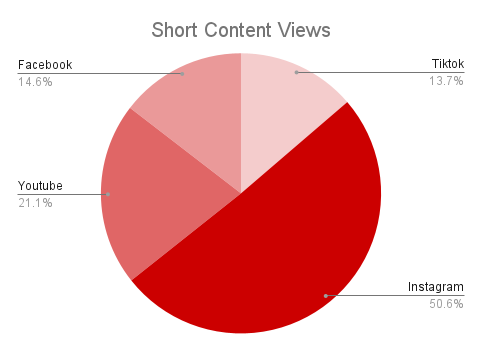
"TikTok is no longer our main platform for short-form campaigns, - the organic reach is too unstable and increasingly dependent on paid boosting. Instagram Reels is currently more promising, at least for visually driven and casual titles. YouTube Shorts is interesting too, but we're approaching it thoughtfully since their algorithm shifts can lead to performance volatility.”
5. Work with Diversified Creators
Structure influencer partnerships so creators can distribute across multiple platforms, reducing your dependence on any single channel. Seek out creators with a strong presence across TikTok, YouTube Shorts, and Instagram Reels, and look for those who understand what works on each platform and can adapt their content accordingly, rather than simply reposting the same video everywhere. Structure deals for multi-platform posting from the start, and prioritize building ongoing relationships over one-off campaigns.
Kramp has seen the difference this makes:
"During our most recent campaign, we asked creators to post across YouTube Shorts, Instagram Reels, and even Facebook Reels. For 85–90% of them, all other platforms performed significantly better than TikTok. Reels and Shorts consistently delivered higher organic reach."
6. Leverage Hashtags Strategically
TikTok now limits posts to five hashtags, aiming to reduce spam and improve discoverability. This forces creators and brands to be more selective and strategic and conduct more research into the best tags.
Gaming TikTok creator Braxfindsgames has felt the impact:
“Recently Titok has limited users to only being able to use 5 tags per post and I feel like that has hindered growth a bit as compared to the beginning of this year. It's been an adjustment, a slight dip in views but overall I've noticed it's made a more engaged audience by focusing on that reach, which isn't necessarily a bad thing.”
Use a balanced approach: mix one or two broad gaming tags (#gaming, #indiegame) with genre-specific or mechanic-specific tags (#cozygame, #roguelike) and your game's own branded hashtag if you have one. Popular hashtags increase visibility, while niche hashtags help you reach a targeted audience more likely to engage with your content.
To find rising hashtags, check the TikTok Trends dashboard. Tools like Sprout Social, TikTok Hashtags, and Hashtag Expert can also help identify the best tags for each video.
7. Be Consistent with Posting
Consistency signals to the algorithm that you're an active creator worth promoting. Aim for a minimum of three posts per week, with four to five being optimal. Daily posting can work, but only if you can maintain quality, burning out on low-effort content will hurt more than help.
Braxfindsgames suggests:
"Be consistent and confident. It's overused advice, but that's because it works. Stick to a schedule, post at least three times a week, and you'll start to see results. If you believe in your game, act like you do. People need to see that you stand behind your own work, and they'll follow suit."
8. Plan for Paid Amplification
The "free virality" era is over, assume you'll need paid support to reliably scale reach. Build a small amplification budget into every campaign; even $500 - 1,000 can make a difference.
As a rough guideline, indie developers should budget $500 - 2,000 per campaign, while mid-tier studios might allocate $2,000 - $10,000.
But don't boost everything. Use Spark Ads to amplify content that's already showing promise: strong watch time, solid click-through rates, early engagement in the first 24 hours. Track cost-per-wishlist rather than just views.
Gaming TikTok creator Game Explorer cautions against over-boosting:
"There's a trend of people saying you should make every video a paid promotion, but I think it's rubbish. Boosting a video can be good if the video is good, but if it's not, it's just wasted money - it won't actually convert anyone."
Don't Build Everything on "Rented Land" – Own Part of Your Ecosystem
Social platforms are incredibly powerful, but they're also fragile. Algorithms change, policies shift, and entire networks can be throttled or banned. The TikTok ban scare of January 2025 was a stark reminder of this reality.
When thinking about your marketing strategy as a whole, it's important not to rely fully on third-party platforms. You must build your own ecosystem.
As Chris Zukowski put it in his article "Don't Build Your Castle in Other People's Kingdoms":
"As a developer, you should treat every single social media network (even the cool ones) like a sinking ship. Sometimes they sink fast, sometimes they seem super strong, sometimes they are so cool, but they are all sinking over time. Don't fall in love. You MUST build your following on a platform that you built that you own. That is a website and a mailing list. You own those and are not subject to the whims of some social media billionaire."
The goal isn't to abandon social platforms, - it's to use them as top-of-funnel discovery while funneling attention toward channels you control:
- Your website serves as your home base: a landing page with trailers, screenshots, press kits, and links to your store pages. When a TikTok goes viral, viewers who want to learn more should land somewhere you own.
- An email list gives you direct access to interested players. Unlike social followers, email subscribers don't disappear when an algorithm changes. A modest list of 5,000 engaged subscribers can be more valuable than 50,000 TikTok followers you can't reliably reach.
- A Discord community creates space for ongoing engagement, feedback, and word-of-mouth. It's also where your most dedicated fans can connect with each other—turning passive viewers into active advocates.
The pattern is simple: use social platforms to reach new audiences, then convert that attention into relationships you control. When the next algorithm shift hits, and it will, you'll have a foundation that doesn't depend on any single platform's whims.
To Sum Up
The developers who thrived during TikTok's golden era weren't just lucky, - they recognized an opportunity and moved fast. The opportunity now is different: it's building a marketing strategy resilient enough to survive whatever comes next, whether that's another algorithm change, a new platform, or regulatory upheaval.
TikTok remains a powerful tool for discovery. But in 2026, the smartest developers will treat it as one channel among many, not the foundation of their entire strategy.


Related articles you may also like
Reddit for Game Developers: The Complete Guide
Top Gaming Marketing & PR Agencies for Video Game Publishers


Request a Free Strategy Session
Discover how Cloutboost can boost your video game's success with our Influencer Marketing Services.